

Luisa Iruela-Arispe
Affiliation(s): Cell and Developmental Biologyarispe@northwestern.edu
Lab Website
arispe@northwestern.edu
Lab Website
xiaomin.bao@northwestern.edu
Lab Website
shelby.blythe@northwestern.edu
Lab Website

rbraun@northwestern.edu
Lab Website
The Braun Lab develops and applies powerful mathematical and computational techniques to investigate living systems at multiple scales — from the atomic level, to the gene level, to the systems level, to the tissue/organismal level, and finally to the population level — and apply these methods in close collaboration with experimentalists and clinicians to address pressing biomedical questions, from circadian disruption to cancer.
j-brickner@northwestern.edu
Lab Website
The Brickner lab studies how cells control the position of genes within the nucleus, and how gene positioning affects gene expression.

r-carthew@northwestern.edu
Lab Website
The Carthew lab studies the complexity of multicellularity by using a variety of technologies, including genomics and quantitative imaging.
jenna.christensen@northwestern.edu
Lab Website
The Christensen lab uses comparative biology and biochemical reconstitution to both understand fundamental principles behind intracellular transport and discover exceptions to these ‘rules’.
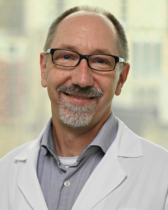
dfoltz@northwestern.edu
Lab Website
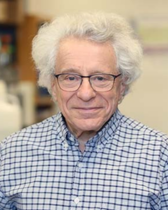
The Gelfand lab uses Drosophila genetics, mammalian and Drosophila cell culture, live cell and tissue imaging to understand how microtubules and other cytoskeletal polymers work together with molecular motors to define cell shape, cell differentiation and drive intracellular transport and organization of the cytoplasm.

c-gottardi@northwestern.edu
Lab Website
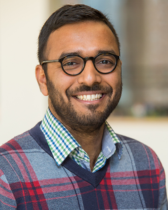
yogesh.goyal@northwestern.edu
Lab Website
The Goyal lab combines theory, computation, and single-cell resolved experiments to track and control cellular plasticity and fate choices in health and disease, particularly cancer.

kgreen@northwestern.edu
Lab Website
The Green group studies how cells physically stick together to provide mechanical strength to tissues and how adhesion molecules convert mechanical and other environmental cues into signals that drive individual and collective cell behaviors in development, differentiation and disease.
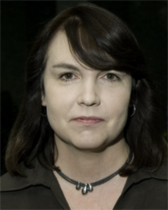
clabonne@northwestern.edu
Lab Website
Work in the LaBonne lab has addressed four central questions: 1) what directs the formation of this stem cell population and controls how longs it retains it stem cell properties? 2) what controls when these cells will begin migrating? 3) how are neural crest cells eventually instructed to form one specialized derivative cell type out of the range of possibilities open to them? and 4) How does the misregulation of neural crest regulatory factors contribute to tumor formation and metastasis?

laura.lackner@northwestern.edu
Lab Website
The Lackner lab studies dynamic interplay between the intracellular distribution of mitochondria and cellular function.
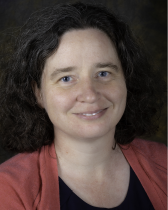
keara.lane@northwestern.edu
Lab Website
The Lane lab is interested in how the dynamics of host and pathogen responses determine the outcome of bacterial infection
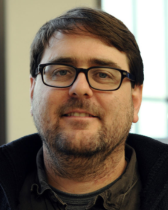
brian-mitchell@northwestern.edu
Lab Website
The goal of the Mitchell Lab is to understand the integration of signaling and cytoskeletal dynamics on diverse developmental processes including centriole amplification, cell migration and cell polarity.
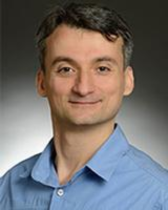
ozbudak@northwestern.edu
Lab Website
The Özbudak Lab’s overriding interest is to achieve a systems-level understanding of embryonic development and pattern formation by integrating quantitative experiments with computational modeling.

saba.parvez@northwestern.edu
Lab Website
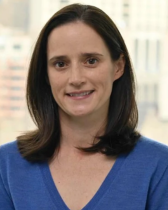
c-peek@northwestern.edu
Lab Website
The Peek lab aims to uncover the physiological impact of the circadian clock on nutrient-responsive regulatory pathways, including oxygen-sensing transcriptional networks
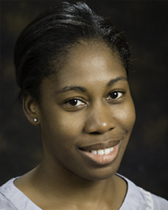
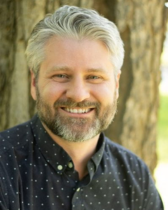
christian-p-petersen@northwestern.edu
Lab Website
The Petersen lab studies the molecular and cellular mechanisms that underlie animal regeneration.
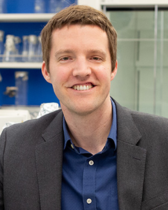
arthur.prindle@northwestern.edu
Lab Website
The Prindle lab is interested in understanding how molecular and cellular interactions give rise to collective behaviors in microbial communities.
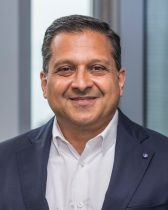
ash@northwestern.edu
Lab Website
The Shilatifard lab investigates the molecular mechanisms that regulate transcriptional and epigenetic processes to control eukaryotic gene expression.

vipul.shukla@northwestern.edu
Lab Website
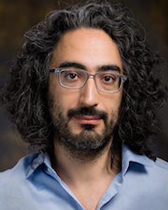
reza.vafabakhsh@northwestern.edu
Lab Website
The Vafabakhsh lab studies the development of methods for quantitative hierarchical characterization of synaptic players at different length scales.
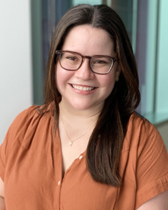
lisandra.vilaellis@northwestern.edu
Lab Website
The Vila Ellis lab studies mechanisms for endothelial cell heterogeneity in the lung.

awang@northwestern.edu
Lab Website
The Wang lab uses genomics approaches to investigate regulatory pathways in mammalian stem cells.
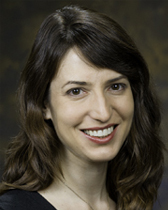
s-wignall@northwestern.edu
Lab Website
The Wignall lab studies the mechanisms that promote accurate chromosome segregation during oocyte meiosis.